 Angrezo
For school students · 13 sentences
Talking to your teacher in English with Hindi meaning
13 sentences with Hindi meaning and pronunciation, a real two-person conversation and a speaking topic.
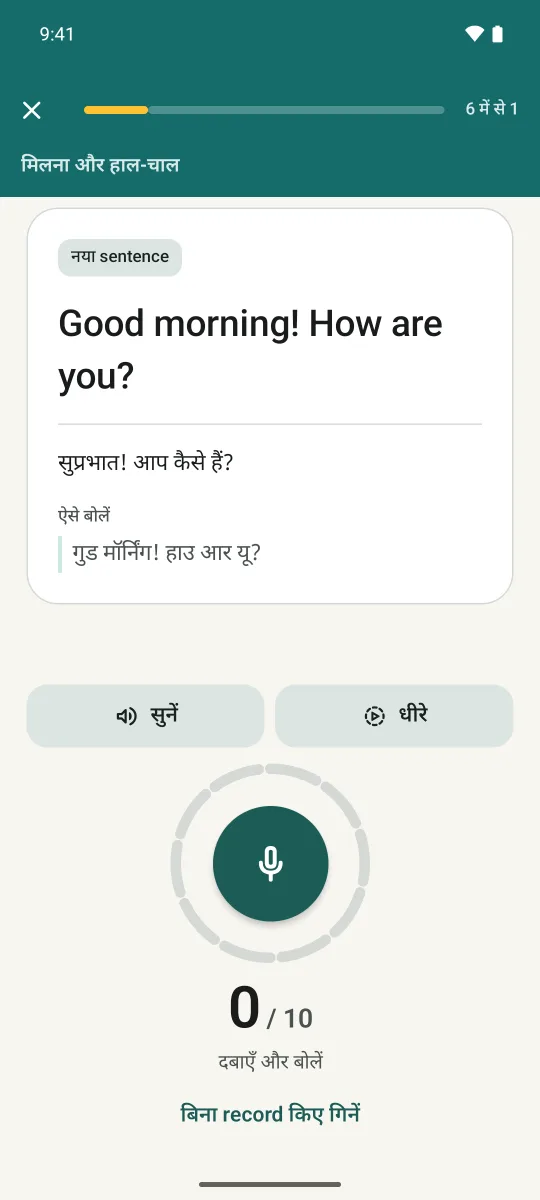
The 13 sentences Angrezo teaches for “talking to your teacher”, with Hindi meaning and pronunciation. Below them: a two-person conversation that uses these sentences, and a speaking topic with a model answer.
अपने टीचर से बात करना · स्कूल के छात्रों के लिए
13 sentences with Hindi meaning
- 1
Good morning, ma'am. May I come in?
गुड मॉर्निंग, मैम। क्या मैं अंदर आ सकता/सकती हूँ?
बोलेंगुड मॉर्निंग, मैम। मे आइ कम इन?
US: Good morning, Mrs. Das. May I come in? · UK: Good morning, Miss. May I come in?
- 2
Could I talk to you after class?
क्या मैं क्लास के बाद आपसे बात कर सकता/सकती हूँ?
बोलेंकुड आइ टॉक टू यू आफ़्टर क्लास?
- 3
I was sick yesterday, so I couldn't come.
कल मेरी तबीयत ख़राब थी, इसलिए मैं नहीं आ पाया/पाई।
बोलेंआइ वॉज़ सिक येस्टरडे, सो आइ कुडन्ट कम।
- 4
Here's the note from my parents.
ये मेरे मम्मी-पापा की चिट्ठी है।
बोलेंहियर्ज़ द नोट फ़्रॉम माय पेरंट्स।
Also: Here's my medical certificate.
- 5
I couldn't finish my homework. I'm sorry.
मैं अपना होमवर्क पूरा नहीं कर पाया/पाई। माफ़ कीजिए।
बोलेंआइ कुडन्ट फ़िनिश माय होमवर्क। आइम सॉरी।
- 6
I'll bring it tomorrow, I promise.
मैं इसे कल ज़रूर ले आऊँगा/आऊँगी, पक्का।
बोलेंआइल ब्रिंग इट टुमॉरो, आइ प्रॉमिस।
- 7
Could you check my answer, please?
मेरा जवाब एक बार देख लीजिए, प्लीज़।
बोलेंकुड यू चेक माय आन्सर, प्लीज़?
- 8
I think there's a mistake in my marks.
मुझे लगता है कि मेरे नंबरों में कोई ग़लती है।
बोलेंआइ थिंक देयर्ज़ अ मिस्टेक इन माय मार्क्स।
US: I think there's a mistake in my grade.
- 9
Can I change my seat? I can't see the board.
क्या मैं अपनी सीट बदल सकता/सकती हूँ? मुझे बोर्ड नहीं दिख रहा।
बोलेंकैन आइ चेंज माय सीट? आइ कान्ट सी द बोर्ड।
- 10
Someone took my water bottle.
किसी ने मेरी पानी की बोतल ले ली है।
बोलेंसमवन टुक माय वॉटर बॉटल।
Also: Someone took my pencil box.
- 11
Can I call my mother? I'm not feeling well.
क्या मैं अपनी मम्मी को फ़ोन कर सकता/सकती हूँ? मेरी तबीयत ठीक नहीं है।
बोलेंकैन आइ कॉल माय मदर? आइम नॉट फ़ीलिंग वेल।
US: Can I call my mom? I'm not feeling well. · UK: Can I call my mum? I'm not feeling well.
- 12
Thank you, ma'am. Now I understand.
धन्यवाद, मैम। अब समझ आ गया।
बोलेंथैंक यू, मैम। नाउ आइ अंडरस्टैंड।
US: Thank you, Mrs. Das. Now I understand. · UK: Thank you, Miss. Now I understand.
- 13
Can I be the class monitor this year?
क्या मैं इस साल क्लास का मॉनिटर बन सकता/सकती हूँ?
बोलेंकैन आइ बी द क्लास मॉनिटर दिस ईयर?
US: Can I be the class representative this year? · UK: Can I be the class rep this year?
Say this, not this
Common habits that come from translating word for word, and the natural way to say the same thing.
Ma'am, I have a doubt.
Ma'am, I have a question.
In most English, “doubt” means you aren't sure something is true. To ask, say “question”. सवाल पूछना हो तो “question” कहें, क्योंकि “doubt” का मतलब है किसी बात पर शक होना।
I didn't did my homework.
I didn't do my homework.
After “didn't”, use the simple verb: do, go, bring. “didn't” के बाद काम बताने वाले शब्द का सीधा रूप बोलें, जैसे “do”, “go” या “bring”।
Sorry, I am not understanding this sum.
Sorry, I don't understand this sum.
Words like “understand” and “know” usually don't take -ing. “understand” और “know” जैसे शब्दों के साथ आम तौर पर “-ing” नहीं लगाते।
Conversation: After the last period
Read both parts once, then say only the “You” lines out loud.
It's the last period. You go up to your class teacher, Mrs. D'Souza, at her desk.आख़िरी पीरियड है। आप अपनी क्लास टीचर मिसेज़ डिसूज़ा की मेज़ के पास उनसे बात करने जाते हैं।
Yes? What's the matter?
हाँ, क्या बात है?
I was sick yesterday, so I couldn't come.
कल मेरी तबीयत ख़राब थी, इसलिए मैं नहीं आ पाया/पाई।
Oh, I hope you're better now. Do you have a note?
अच्छा, उम्मीद है अब तुम्हारी तबीयत बेहतर है। तुम्हारे पास घर से कोई चिट्ठी है?
Here's the note from my parents.
ये मेरे मम्मी-पापा की चिट्ठी है।
Thank you. Did you finish the homework I gave on Monday?
शुक्रिया। सोमवार को जो होमवर्क दिया था, वो पूरा कर लिया?
I couldn't finish my homework. I'm sorry.
मैं अपना होमवर्क पूरा नहीं कर पाया/पाई। माफ़ कीजिए।
That's okay this time. When can you bring it?
इस बार कोई बात नहीं। होमवर्क कब तक ला सकते हो?
I'll bring it tomorrow, I promise.
मैं इसे कल ज़रूर ले आऊँगा/आऊँगी, पक्का।
Good. And ask Rohan for yesterday's notes.
ठीक है। और रोहन से कल के नोट्स माँग लेना।
Okay, thank you, ma'am.
ठीक है, धन्यवाद, मैम।
Speak on your own: Your school day
Describe a normal school day. What do you do from morning till evening?
स्कूल वाले एक आम दिन के बारे में बताइए। आप सुबह से शाम तक क्या-क्या करते हैं?
Tipसुबह से शुरू कीजिए और अपनी दिनचर्या क्रम से बताइए।
Try answering for one minute before you read the model answer.
Model answer
My school day starts early, at about six thirty.
स्कूल वाले दिन मेरी सुबह जल्दी, करीब साढ़े छह बजे शुरू होती है।
I get ready, have breakfast and take the school bus at seven fifteen.
मैं तैयार होकर नाश्ता करता/करती हूँ और सवा सात बजे स्कूल बस पकड़ता/पकड़ती हूँ।
Classes start at eight with the morning assembly.
सुबह आठ बजे असेंबली के साथ क्लासें शुरू होती हैं।
My favourite period is science, because we do small experiments.
मेरा पसंदीदा पीरियड साइंस का है, क्योंकि उसमें हम छोटे-छोटे प्रयोग करते हैं।
During the lunch break, I share my tiffin with my friends.
लंच ब्रेक में मैं अपना टिफ़िन दोस्तों के साथ बाँटकर खाता/खाती हूँ।
After school, I have tuition from five to six.
स्कूल के बाद पाँच से छह बजे तक मेरी ट्यूशन होती है।
In the evening, I finish my homework and then watch some TV.
शाम को मैं होमवर्क पूरा करता/करती हूँ और फिर थोड़ी देर टीवी देखता/देखती हूँ।
More from “For school students”
Questions people ask
How do I practise talking to your teacher in English?
Read the Hindi meaning, say each English sentence out loud five times, then cover the English and say it from the Hindi. After that, say the “You” lines of the conversation and answer the speaking topic for one minute.
Can I hear these sentences?
Yes, in the Angrezo app: a studio voice at normal and slow speed, and you can record yourself and compare. You can choose Indian, American or British English.
Is this situation free in the app?
Yes. This situation is part of the free start in Angrezo.
More free guides
Start speaking today
The first 100 sentences, one situation in every pack and 3 speaking topics are free. No account needed. Works offline. No ads.